
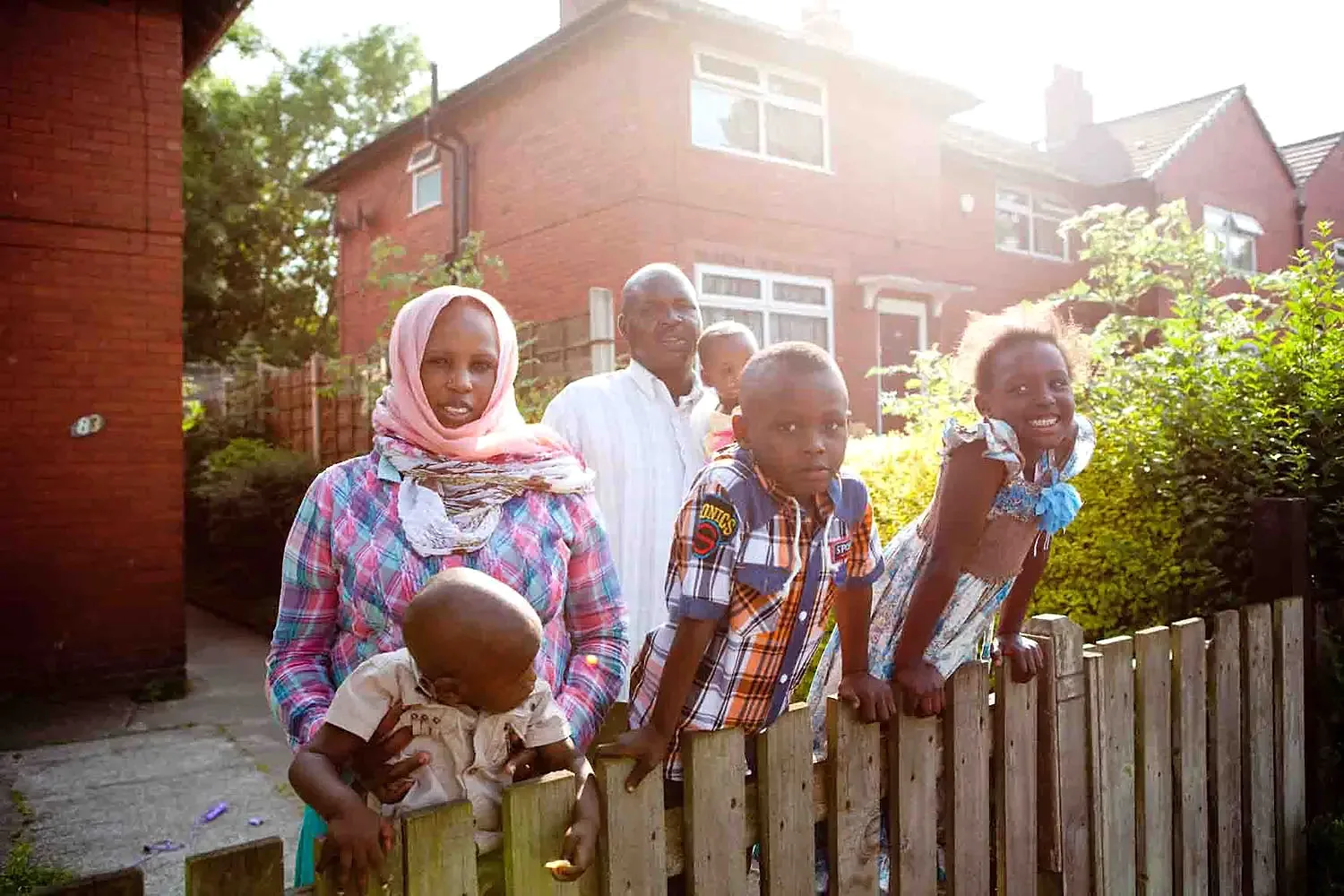
It’s a privilege to feel safe at home – one that many of us rarely stop to notice as we sit on our cosy sofas and feel the quiet comfort of belonging.
But for people seeking asylum, “home” can mean isolation, danger, and indignity.
Instead of safety, they find themselves in crumbling hotels and overcrowded houses where privacy, dignity, and stability are impossible, and where the threat of riots and violent protests has turned accommodation itself into a place of fear.
In the weeks after the summer 2024 riots, I sat in policy workshops with people who had lived through the asylum housing system.
“At the end of the day we are just human beings asking for equal treatment. We are not asking for mansions but a house that feels like home and where you can live with dignity.”, a person said to me at the workshop.
“When I walk home from somewhere, I dread arriving because it’s such a bad house. And the more I walk and get closer, I get tearful.”
Hearing lived-experience experts reflect on what “home” meant to them – and how distant that was from their reality, with some forced to sleep in boiler rooms of run-down hotels – left a lasting impression on me as I continued working in asylum housing policy.
It informed the research presented in this blog and reinforced my conviction that change must begin now.
Across the UK, tens of thousands of people seeking asylum are being accommodated in hotels.
Such accommodation harms their physical and mental health, isolates them, and exposes to racist attacks, while simultaneously draining public funds, and placing pressure on local housing markets and services.
Years of centralised contracts and emergency measures have fragmented responsibility and made it difficult for councils or communities to play a meaningful role in welcoming people seeking safety.
Refugee Action’s new research explores what a different approach could look like: one where asylum housing is no longer siloed from wider housing and community policy, but integrated into local planning and investment.
The findings show that, with the right conditions, a more joined-up model could deliver better value for money and far better outcomes for people seeking asylum, for local authorities, and for communities across the country.
A desiloed system that invests in people and places
Participants in the research (local government, voluntary sector partners, strategic roles, and academia) emphasised that any change must be properly resourced, clearly governed, and phased carefully.
While they were cautious about the practicalities of decentralisation, they recognised that a more coherent, locally connected system could bring long-term benefits if underpinned by sustainable investment and fair distribution of responsibilities.
A desiloed approach would treat asylum housing as part of the public housing system rather than an isolated emergency scheme.
That means aligning it with local housing strategies and inclusion programmes – ensuring that public money contributes to lasting social value.
Investment in local housing supply, including renovation and new-build properties, would not only replace costly hotel use but also expand the affordable housing stock that benefits everyone.
Community benefits beyond bricks and mortar
The research highlights that community readiness and inclusion are central to success of asylum housing policy.
When people are placed in housing that allows stability and connection, they can access health services, education, and employment support more easily.
When local communities are informed and involved from the outset, tensions fall and community resilience grows.
Reducing reliance on hotels is therefore not just about saving money but about building safer, more resilient neighbourhoods.
Asylum accommodation, often imposed without appropriate consultation, has too often become a flashpoint for anger and misinformation.
By contrast, planned, community-based housing can strengthen local services and foster understanding.
Our research also shows that giving people seeking asylum the right to work would complement asylum housing reform.
Work access supports inclusion and reduces dependence on public funds and housing, allowing individuals to contribute to the local economy, fill essential job gaps, and rebuild their lives with dignity.
What it will take: the enablers of real reform
The report identifies several conditions that must be in place for any transition to succeed:
- Long-term investment in housing and capacity – to build the homes and partnerships required for sustainable delivery.
- Clear governance and accountability – defining local and national roles, and ensuring coproduction, transparency and data-sharing.
- Fair-share responsibility across regions – so that no single area carries a disproportionate responsibility.
- Political will and a shift in narrative – from managing asylum as a problem to recognising it as an opportunity to invest in communities and shared prosperity.
Together, these enablers create the foundations for an asylum housing system that works – one that replaces profit-driven outsourcing with public benefit and local empowerment.
A call for leadership and vision
For too long, public debate about asylum has been dominated by fear and division. Yet the evidence shows that communities are strongest when everyone has a safe place to live and a fair chance to contribute.
A reformed asylum housing system could be part of a broader renewal: investing in homes, rebuilding local capacity, and demonstrating that inclusion and efficiency can go hand in hand.
Delivering this change requires political courage to abandon hostile rhetoric and ineffective policies, redirect funding from short-term contracts into long-term community assets, to trust local authorities and partners with real responsibility, and to speak about asylum in terms of fairness and shared benefit rather than crisis and control.
A housing system that supports people seeking asylum is, in the end, a housing system that supports us all.
By investing in communities instead of contingency, the government can replace division with dignity and turn asylum housing from a symbol of failure into a foundation for resilience.
By Elena Krsmanović